




Koh Lanta Krabi: Quiet Beaches, Clear Water, and What to Do
 Railay Eco
Koh Lanta is part of Krabi province, south of Krabi town. It is an island you can drive across, with long sand beaches lined up one after another and far fewer people than the better-known Andaman islands. The draw is simple: beaches you can walk for a kilometre without queuing for space, clear water from November through April, and a sunset you can watch from any west-facing beach. You can reach Koh Lanta two ways — drive and take the car ferry, or take a passenger boat from a Krabi pier. This guide covers both routes, which beach suits which kind of traveller, and the months when the water is at its clearest.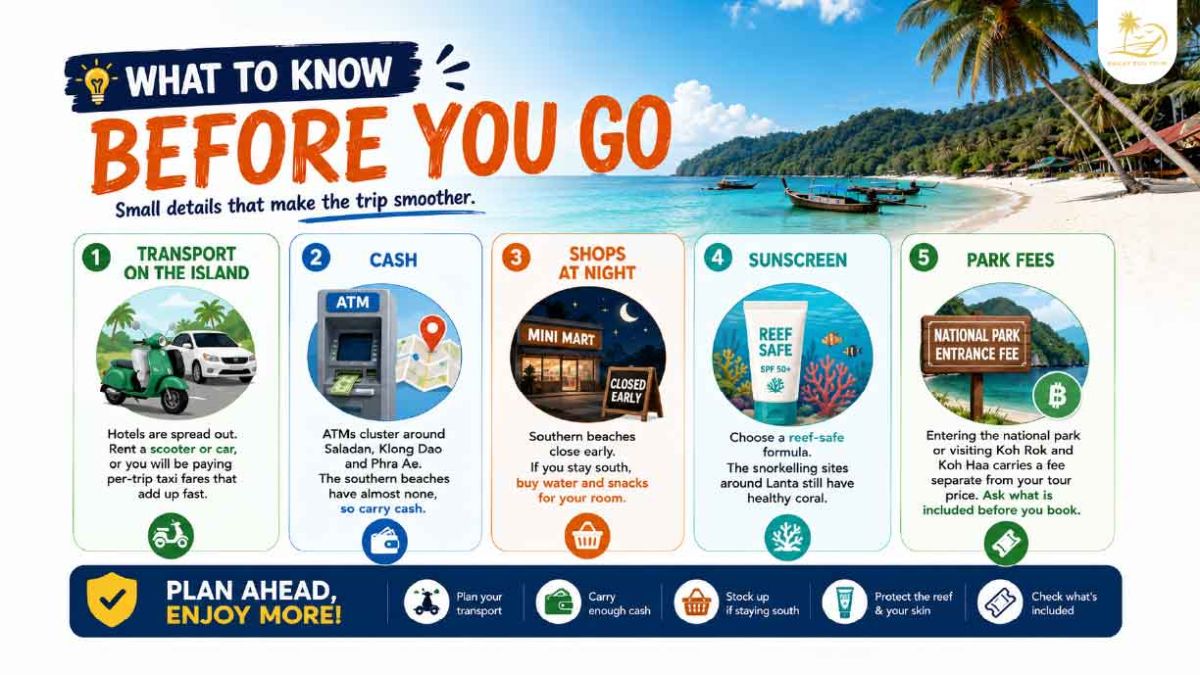
Which province is Koh Lanta in, and how far is it from Krabi town?
Koh Lanta is a district of Krabi province. It sits roughly 70 to 100 kilometres south of Krabi town, depending on the route you take.
Plenty of visitors assume Lanta belongs to Trang or Satun, because it sits close to the provincial boundary. Every main tourist beach on the island, though, is inside Krabi.
Koh Lanta is actually two islands
What people call Koh Lanta is really two separate islands.
- Koh Lanta Yai is where visitors stay. It has a coastal road, hotels, restaurants, and beaches running down the whole west side.
- Koh Lanta Noi sits between the mainland and Lanta Yai. It is mostly villages and rubber plantations and fewer people stop there — but a bridge now connects it to Lanta Yai, so you simply drive straight through.
What sets Lanta apart from other Krabi islands is the road. You can rent a scooter or drive and move between beaches yourself, instead of booking a boat every time you want to change location.
How to get to Koh Lanta
There are two broad options: drive and cross by car ferry, or take a passenger boat from a Krabi pier.
Driving and taking the car ferry
This is the most popular route for anyone with their own car or a rental, because you keep the vehicle on the island.
- Drive south from Krabi town towards Khlong Thom district, then turn off for Hua Hin pier, the mainland car-ferry terminal.
- Take the ferry across to Koh Lanta Noi. The crossing is short and ferries run frequently through the day.
- From Lanta Noi, drive over the bridge to Lanta Yai and turn down the west coast road.
Krabi town to Klong Dao beach takes roughly 2 to 2.5 hours in total, including ferry waiting time.
Passenger boat from a Krabi pier
During the tourist season, boats run directly to Koh Lanta. This suits anyone travelling without a vehicle.
- Boats leave from piers in Krabi town or Ao Nang and land at Saladan pier at the north end of Lanta Yai.
- The trip takes roughly 1.5 to 2 hours, depending on the boat and the swell.
- During the monsoon, from May to October, some routes reduce frequency or stop entirely. Always check schedules before you travel.
If you want to compare sea travel times across Krabi routes before deciding, the Krabi boat schedule covers every route in one place.
Can you come straight from another island?
Yes. In season, boats connect Lanta with Koh Phi Phi and the Trang coast. Travellers doing several islands often put Lanta last, because you can leave by road or by sea — more flexible than islands with no road at all.
Which Koh Lanta beach suits which traveller?
The west-coast beaches of Lanta Yai run north to south. The further south you go, the quieter it gets; the further north, the more hotels and restaurants you find. Pick by the trip you want.
Klong Dao
The longest beach and the northernmost of the tourist beaches. You can walk it for kilometres, and hotels and restaurants line the whole stretch. Best for first-time visitors who want food within walking distance and no long drives.
Phra Ae (Long Beach)
Just south of Klong Dao, this is the busiest part of the island. Restaurants, massage shops, and small stores run in a long line. Good if you want something to do in the evening but still want a wide beach during the day.
Klong Khong
A mid-island beach with fine sand and fewer people than the two above. Hotels are spread further apart. Best for couples who want quiet but can still drive a few minutes for a meal.
Klong Nin
Further south, and noticeably thinner crowds. The water is clearer and the sand whiter than the northern beaches. Best for anyone here to genuinely rest rather than socialise.
Bakantiang
The southernmost of the tourist beaches, with few hotels and the smallest crowds. If you want a beach where almost nobody walks past, this is it — but bring a scooter or car, because restaurants are far apart.
What is there to do on Koh Lanta besides the beach?
Many people assume Lanta is beach-only. There is more on and around the island than that.
Snorkelling around the outer islands
Boats run from Lanta to Koh Rok and Koh Haa, both with clearer water and healthier coral than the near-shore spots. Trips usually leave in the morning and return mid-afternoon. The good window is November through April.
Driving the coast road to the viewpoints
The main road on Lanta Yai runs along the hillside with several signposted sea viewpoints. Driving north to the southern tip takes about an hour, with stops for photos along the way. This works even on days when the swell is too big for boats.
Walking Lanta Old Town
On the east side of the island sits the old town — wooden shophouses over the water, built by the Chinese and sea-gypsy communities who lived here long before tourism. Cafés and restaurants now occupy some of the old buildings. A good option for an afternoon when the beach sun is too harsh.
Visiting the national park at the tip
The southern end of Lanta Yai falls inside Mu Ko Lanta National Park. There is a lighthouse for photos, a short nature trail, and a rocky beach with views of the surrounding islands. Park entry is charged at the rate posted at the gate.
When is the water clearest on Koh Lanta?
The sea around Lanta changes noticeably by season, and picking the right month changes the whole trip.
November to April
The clearest water and calmest sea of the year. Boats run daily and snorkelling trips operate on full schedule. Hotels fill quickly from late December through February, so book ahead.
May to October
Monsoon season on the Andaman coast. Rain comes in bursts and the swell picks up. Room rates drop and crowds thin out a lot. You can still walk the beaches and visit the old town, but boat trips beyond the island may be cancelled on some days.
If you want to know what the Andaman coast is actually like month by month during monsoon and which spots still work, the Krabi monsoon guide breaks it down.
Compared with other Krabi islands
Lanta has a real advantage during monsoon over islands you can only reach by boat, because you can still drive on even when the swell is up. Islands with no road simply become unreachable when boats stop running.
What to know before you go
Small details that make the trip smoother.
- Transport on the island — hotels are spread out. Rent a scooter or car, or you will be paying per-trip taxi fares that add up fast.
- Cash — ATMs cluster around Saladan, Klong Dao and Phra Ae. The southern beaches have almost none, so carry cash.
- Shops at night — southern beaches close early. If you stay south, buy water and snacks for your room.
- Sunscreen — choose a reef-safe formula. The snorkelling sites around Lanta still have healthy coral.
- Park fees — entering the national park or visiting Koh Rok and Koh Haa carries a fee separate from your tour price. Ask what is included before you book.
Want Koh Lanta and other Krabi islands in one trip?
Plenty of visitors reach Lanta and then want to add Talay Waek, Hong Island, or Phi Phi to the same trip — without knowing how to order the days so they are not doubling back on the same boat route.
Railay Eco Tour is a local boat team born and raised in Krabi. We know which side of the coast stays calm in which month, and we can sequence islands to match the boats that actually run that day. We build the trip around the days you have, we do not cram in more stops than the hours allow, and we will tell you straight when the sea is not right for a crossing. If you are planning the whole trip from scratch, read it alongside our complete Krabi travel guide, then message us.
Frequently asked questions
Which province is Koh Lanta in?
Koh Lanta is in Krabi province — it is Koh Lanta district, south of Krabi town. Many people assume it belongs to Trang or Satun because it sits near the provincial boundary, but all the main tourist beaches are inside Krabi.
Do you have to take a boat to Koh Lanta?
No. You can drive and take the car ferry from the mainland pier, which makes Lanta easier to reach than islands served only by boat. If you are not bringing a vehicle, passenger boats run from Krabi piers instead.
Which Koh Lanta beach is the quietest?
The southern beaches are clearly quieter than the northern ones. Klong Nin and Bakantiang have the fewest people — but you will want a scooter or car, because restaurants and shops are spread far apart.
How many days do you need on Koh Lanta?
Two days and one night is enough for the main beaches and a drive along the coast road. Add snorkelling at Koh Rok or Koh Haa and you want three days and two nights, since those trips take most of a day.
Can you visit Koh Lanta during monsoon?
Yes, because you can still reach the island by road. Beaches are walkable and the old town is open, room rates are lower and crowds much thinner. Boat trips beyond the island may be cancelled on some days, so keep a spare day in the plan.
References
- Wikipedia: Ko Lanta District: location and district information
- Wikipedia: Mu Ko Lanta National Park: park boundaries and visitor sites
- Wikipedia: Krabi Province: geography and seasons
Krabi walking street runs in the old-town quarter of Krabi town, on weekend evenings only — not every night. Visitors staying in Ao Nang who drive in without checking the day regularly find an empty street. The draw is freshly cooked food at local prices that Krabi people actually eat: grilled seafood, regional sweets, fresh-pressed juices, plus handicraft stalls from people in the area.
 Railay Eco
Poda Island is a small island in Krabi province, south of Ao Nang — roughly 20 to 30 minutes by longtail boat or about 15 minutes by speedboat. What stands out is the fine white sand and the water, which stays shallow on a long gentle slope.
Railay EcoPileh Lagoon sits on Phi Phi Leh in Krabi province — a bay almost completely ringed by tall limestone cliffs, with one narrow gap for boats to pass through. No swell reaches inside, so the water sits still, and the white sand floor below reflects the light back as emerald. Every trip to Phi Phi Leh stops here, because it is only minutes from Maya Bay.
Railay EcoKrabi Airport sits roughly 15 kilometres from Krabi town and 30 to 40 minutes by road from Ao Nang. To reach Ao Nang you can take the airport bus, a shared minivan, a taxi, or a private transfer booked in advance. Railay is a different matter: it is a peninsula no road reaches, so you take a vehicle to a pier and then a boat. The mistake people make most often is landing late and finding the last boats into Railay already finished for the day. This guide covers each transport option, journey times, rough costs, and how to handle a late arrival.
Railay EcoNopparat Thara Beach is in Krabi town district, immediately west of Ao Nang — five to ten minutes away on foot or by car. It runs for several kilometres, holds far fewer people than Ao Nang, and has the national park headquarters sitting right on the sand. The detail most visitors miss: at the lowest tides a sandbar emerges and you can walk out to the small island offshore without a boat. It also serves as a departure point for some island routes, so it works both as a place to rest and as a way out to sea. This guide covers how it differs from Ao Nang, how to get there, and when to go.
Railay EcoHong Island belongs to Krabi province and sits inside Than Bok Khorani National Park, north of Ao Nang — roughly 30 to 40 minutes by speedboat, or about an hour by longtail. What makes it different from the other Krabi islands is the lagoon in its middle: a pool of water almost entirely enclosed by tall limestone cliffs, with one narrow opening that small boats can slip through when the tide is high enough.
Railay Eco